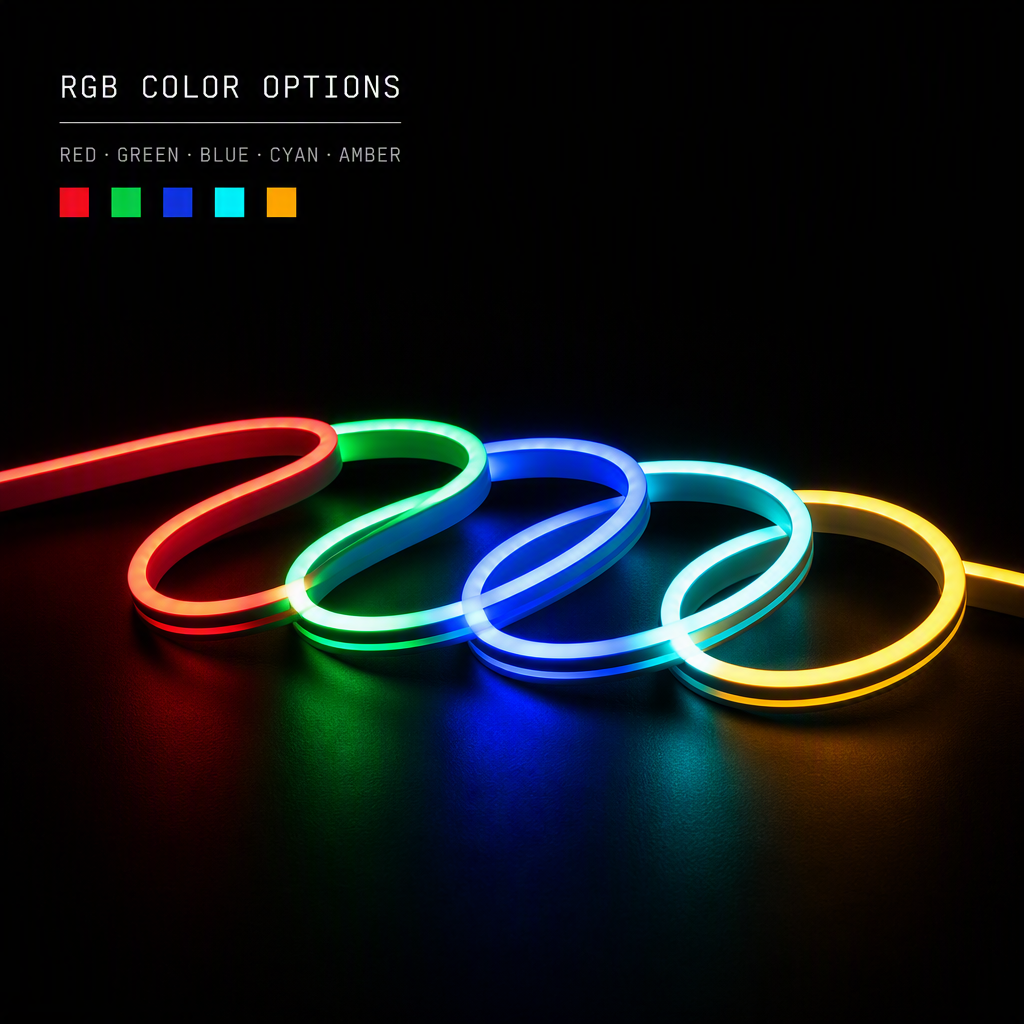
Selecting the correct power supply for your rgb led strip is critical for reliable operation, optimal brightness, and component longevity. Many installers and end users overlook this fundamental requirement, leading to flickering, color inconsistency, or premature failure of the strip itself. Understanding voltage specifications, current draw, and power capacity is essential before purchasing or deploying any dynamic lighting strip in your space.

An addressable rgb strip and a standard smart color led tape each have distinct power requirements that directly affect how you must configure your electrical system. This guide will walk you through voltage standards, wattage calculations, and practical selection criteria so you can match the right power supply to your specific lighting installation needs and avoid costly mistakes.
Voltage Requirements for RGB LED Strips
Understanding DC Voltage Standards
Most rgb led strip products operate on direct current (DC) voltage, with 12V and 24V being the two dominant standards in the market. A 12V rgb led strip is the most commonly used configuration for residential and commercial ambient lighting applications, offering a balance between safety, component availability, and performance. The 24V variant appeals to installations requiring longer cable runs or higher overall wattage without excessive current draw, which reduces voltage drop and heat buildup in power distribution lines.
Mixing voltage standards is dangerous and will damage your equipment. Before purchasing a power supply, verify the exact voltage specification printed on your smart color led tape packaging or product datasheet. Some addressable rgb strip models may operate at 5V if they use WS2812B or similar integrated LED controllers, so always confirm the exact requirement before connecting power.
Voltage Stability and Supply Quality
Low-quality power supplies introduce voltage fluctuation and ripple, which cause a dynamic lighting strip to flicker or display incorrect colors during operation. A regulated power supply maintains consistent voltage output regardless of load variation, ensuring your rgb led strip displays steady, predictable color and brightness. Industrial-grade supplies often include filtering circuits and voltage regulation systems that protect your lighting investment.
Calculating Power Consumption and Wattage
LED Strip Power Draw Per Unit Length
Power consumption for an addressable rgb strip varies based on LED density, color depth, and brightness setting. A typical 12V rgb led strip with 60 LEDs per meter consumes approximately 10 to 14 watts per meter at full white brightness. Denser variants with 120 or 144 LEDs per meter may draw 20 to 30 watts per meter. A smart color led tape running at reduced brightness or displaying cooler colors will consume less power than full-intensity white output, allowing you to optimize supply capacity based on actual use patterns.
To calculate your total power requirement, measure the length of dynamic lighting strip you plan to install in meters, then multiply by the watts-per-meter rating for your specific product. For example, a 5-meter run of a 60-LED 12V rgb led strip at 12 watts per meter requires a 60-watt supply before accounting for safety margin and controller overhead. Always round up to the next standard power supply size to provide headroom for peaks and aging components.
Safety Margin and Headroom
Industry best practice requires a power supply rated for 1.25 to 1.5 times your calculated peak load. If your addressable rgb strip draws 60 watts, select a 75 to 100-watt supply to ensure stable operation during power surges, color transitions, and controller activity. This headroom prevents power supply shutdown due to overcurrent protection and extends overall system lifespan by reducing thermal stress on internal components.
Selecting and Installing the Right Power Supply
Power Supply Type and Connector Options
Desktop and compact power supplies often use barrel connectors (typically 5.5mm x 2.5mm for 12V systems) that directly interface with your smart color led tape controller or strip housing. Industrial installations may employ terminal blocks, Molex connectors, or wired connections for greater customization and reliability. An addressable rgb strip with integrated control may have proprietary connectors, so verify compatibility before ordering a replacement supply. Ensure the connector type matches your controller or strip plug to avoid adapter purchases and connection reliability issues.
Controller Integration and Safety Considerations
Most rgb led strip systems include an RGB controller that sits between the power supply and the strip itself. This controller may draw an additional 1 to 3 watts during operation, so add this to your power calculation. Some dynamic lighting strip installations use multiple controllers or amplifiers for extended runs, each requiring separate power consideration. Verify that your power supply amperage rating exceeds the total system current draw, calculated by dividing total watts by voltage (watts ÷ volts = amps). A 60-watt 12V supply delivers 5 amps maximum, which must safely cover your strip, controller, and any downstream components.
Use certified, grounded power supplies from reputable manufacturers to minimize fire and electrical hazard risk. Avoid counterfeit or unmarked supplies, which often lack proper thermal protection and overcurrent safeguards. Ensure your installation is protected by a circuit breaker or fuse rated for the supply amperage, and never exceed the power supply's rated capacity or ambient temperature limits.
FAQ
Can I use a 24V power supply with a 12V RGB LED strip?
No, using a 24V supply with a 12V rgb led strip will destroy the LEDs and controller immediately. Voltage mismatch causes component burnout and presents a fire risk. Always match the exact voltage rating of your addressable rgb strip, and double-check your supply specification before connecting power.
How do I know if my power supply is undersized?
Signs of an undersized power supply include flickering, color shifting to unusual hues, dimming during bright scenes, and automatic shutdown or reset of your dynamic lighting strip. These symptoms indicate insufficient headroom or excessive current draw. Upgrade to a larger-capacity supply and verify your total system wattage calculation is correct for your smart color led tape length and LED density.
Do I need a separate supply for each section of RGB LED strip?
For runs under 10 meters on a 12V system, a single oversized power supply can feed all segments through parallel wiring. Beyond 10 meters or on high-current installations, voltage drop becomes problematic and a dedicated supply per section is recommended. Consult your addressable rgb strip documentation and electrical plan to determine whether a single shared supply or multiple supplies best fits your dynamic lighting strip layout.
 EN