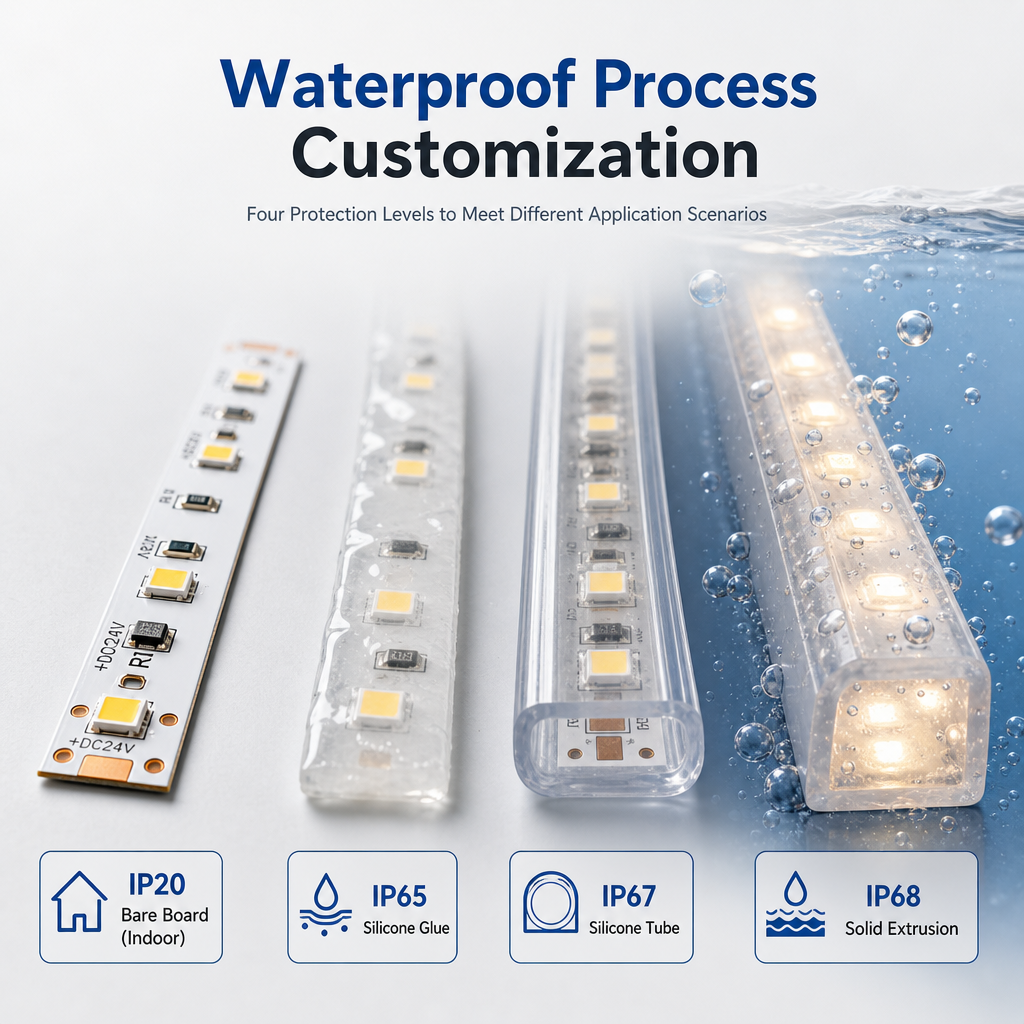
Selecting the right waterproof led strip lights requires understanding IP ratings and their real-world implications. An IP rating—or Ingress Protection rating—is a numerical classification system that specifies how well a light fixture resists dust and water penetration. For outdoor installations, pool areas, bathrooms, and other moisture-heavy environments, choosing the correct IP rating is critical to equipment longevity, safety, and performance reliability.
The specific IP rating you need depends entirely on your installation environment and exposure conditions. Not all water-resistant LED lighting applications demand the highest protection level, and understanding the difference between IP65, IP67, and IP68 standards will help you make cost-effective decisions without compromising durability. This guide explores what IP ratings mean, which levels suit different scenarios, and how to verify that your outdoor LED strip lights meet the requirements for your project.
Understanding IP Rating Standards and What Numbers Mean
An IP rating consists of two digits. The first digit, ranging from 0 to 6, indicates dust protection; the second digit, ranging from 0 to 9, indicates water resistance. For outdoor led strip lights and interior moisture applications, the second digit matters most. A rating of IP65, for example, means the device is dust-tight and can withstand low-pressure water jets. IP67 adds temporary immersion protection, while IP68 offers full submersion capability under specified pressure and duration.
The First Digit: Dust Protection Level
The first digit of an IP rated led strips designation addresses solid object and dust ingress. A rating of 0 means no protection; a rating of 6 means complete dust-tight protection. For water resistant led lighting installed outdoors, dust protection prevents sand, dirt, pollen, and environmental particles from settling on or inside the fixture. This protects internal electronics and maintains light output clarity over time. Most quality outdoor LED strip lights carry a first digit of at least 4 or 5, providing meaningful dust resistance.
The Second Digit: Water Penetration Resistance
The second digit directly addresses water protection and determines whether your waterproof led strip lights can survive rain, spray, splashing, or submersion. A rating of 4 means splash protection from any direction; 5 means low-pressure water jet protection; 6 means strong water jet protection; 7 means temporary immersion; 8 means submersion under pressure; 9 means high-temperature, high-pressure water jets. For most outdoor led strip lights applications, ratings between 5 and 8 provide the durability needed for long-term reliability.
Matching IP Ratings to Installation Environments
Choosing the appropriate rating for your ip rated led strips depends on how directly the fixture encounters moisture and environmental stress. An LED strip in a covered patio experiences different exposure than one submerged in a pool. Understanding the distinction between these environments helps you select water resistant led lighting that balances protection level with cost efficiency.
IP65 for Covered and Partially Exposed Installations
IP65-rated waterproof led strip lights suit covered outdoor areas such as patios with roofs, eaves, gazebos, and pergolas. This rating handles splashing, light rain spray from any angle, and general moisture from condensation. It does not protect against direct water jets or submersion. For applications like accent lighting under patio covers or architectural outdoor led strip lights mounted above eye level, IP65 provides adequate protection at a lower cost than higher ratings. The rating ensures that moisture does not reach internal circuitry while allowing normal airflow.
IP67 for Direct Rain and Occasional Splash Exposure
IP67-rated ip rated led strips offer temporary immersion protection and suit exposed outdoor locations where rain directly contacts the fixture. Examples include LED strips lining deck railings, landscape borders, roofline accent lighting, and architectural facades. Temporary immersion means the fixture can survive brief underwater exposure—such as accidental submersion during cleaning or heavy flooding—without permanent damage, provided the duration and depth align with manufacturer specifications. This rating covers water resistant led lighting applications where direct rainfall is frequent and unavoidable.
IP68 for Underwater and High-Moisture Environments
IP68-rated waterproof led strip lights are engineered for continuous submersion in water or prolonged high-moisture environments such as pools, fountains, water features, saunas, and commercial kitchen installations. This rating guarantees the fixture survives immersion under specified pressure and depth conditions, typically ranging from shallow ponds to depths of several meters depending on the specific manufacturer's rating. For outdoor led strip lights intended as underwater accent lighting, pool border illumination, or interior wet rooms, IP68 is the minimum standard that ensures safe operation.
Practical Considerations Beyond the IP Rating Number
While IP ratings provide a standardized framework for evaluating water resistant led lighting, real-world performance also depends on material quality, connector design, and installation practices. A theoretically suitable ip rated led strips may fail prematurely if corrosion-resistant connectors are not used or if the fixture is installed in a manner that allows water pooling around electrical connections.
Material Quality and Connector Integrity
The effectiveness of any waterproof led strip lights installation hinges on materials and connections. Silicone tubing, epoxy potting, and stainless steel components resist corrosion longer than standard materials, particularly in saltwater or chemically treated water environments. Connectors rated IP67 or higher ensure that electrical contacts remain protected even when wet. When selecting outdoor led strip lights, verify that the entire assembly—strip, connectors, power supply, and housing—meets or exceeds your required IP rating. A strip rated IP68 paired with an IP20 power supply creates a weak link that compromises overall system reliability.
Installation and Mounting Practices
Proper installation of water resistant led lighting extends lifespan significantly. Ensure drainage pathways around the fixture so water does not collect in crevices or against connectors. Seal cable entry points with appropriate silicone sealants rated for external use. Position ip rated led strips so moisture naturally runs off rather than pooling. For applications like architectural outdoor led strip lights mounted on vertical surfaces, slight downward angles facilitate drainage. Even a high IP rating cannot protect against installation oversights such as connectors pointed upward or cables routed through areas where water collects.
FAQ
What does IP68 mean for waterproof LED strip lights?
IP68 indicates complete dust protection and the highest level of water resistance, allowing the fixture to survive continuous submersion under specified pressure and depth. This rating is ideal for pool lighting, underwater applications, and permanent installations in water features or wet rooms where outdoor led strip lights must endure prolonged moisture exposure without damage.
Is IP67 sufficient for outdoor deck and landscape lighting?
Yes, IP67-rated ip rated led strips provide adequate protection for most outdoor landscape and deck applications where the fixture is exposed to rain, splashing, and occasional water jets. This rating allows temporary immersion, meaning the fixture survives brief underwater contact and heavy rain without failure, making it suitable for water resistant led lighting in non-submersion outdoor environments.
Can I use IP65 waterproof led strip lights outdoors?
IP65 is acceptable for covered outdoor areas such as patios under eaves, pergolas, or gazebos where the fixture receives splash and light rain but not direct water exposure or submersion. For fully exposed outdoor led strip lights locations where rain is frequent and direct, IP67 or IP68 is recommended to ensure long-term durability and safety of water resistant led lighting installations.
 EN