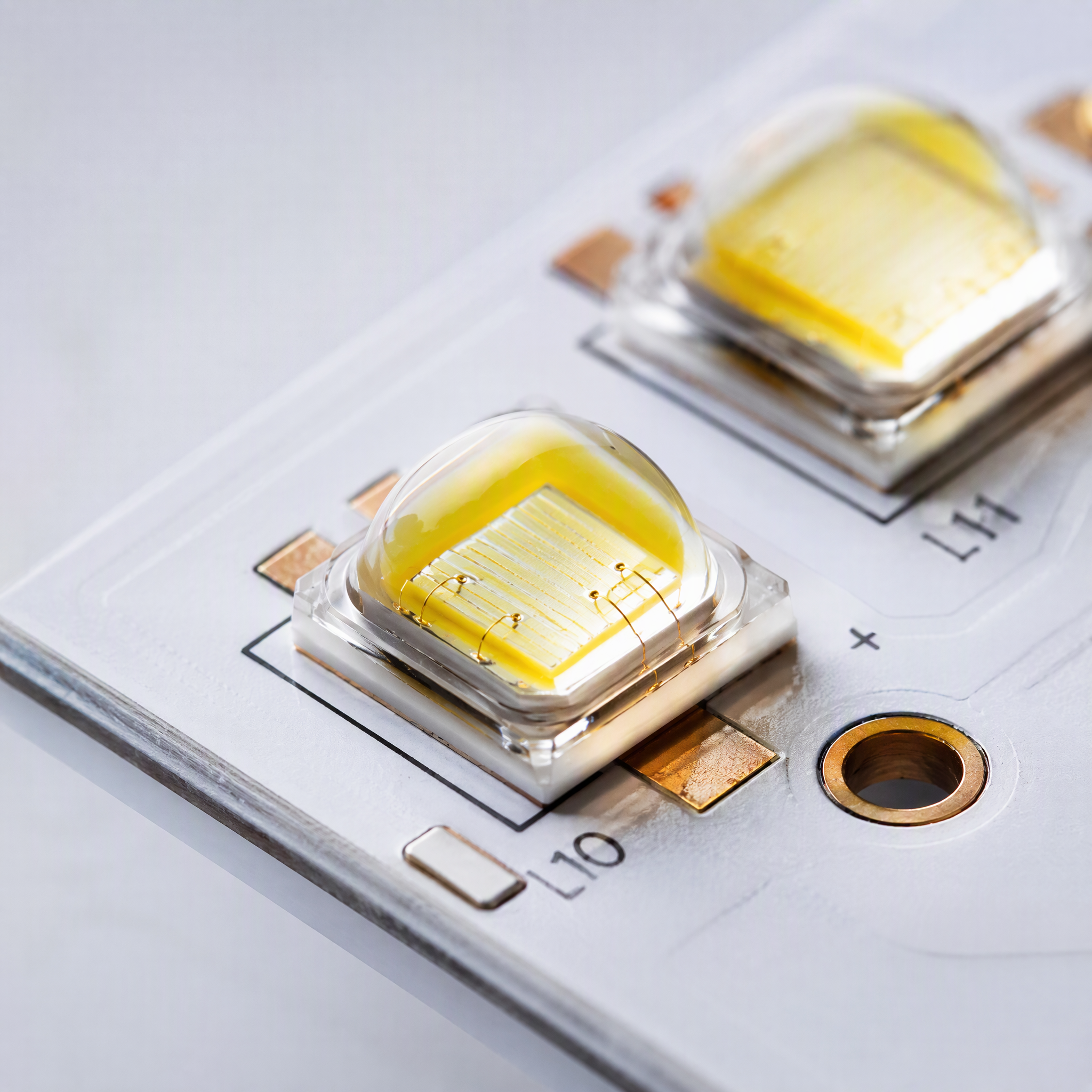
The relationship between diodes and LEDs often confuses engineers and procurement specialists in industrial settings. While all LEDs are technically diodes, not all diodes are LEDs. Understanding the functional differences between these semiconductor light emitting devices is critical for selecting the right component for your application. This distinction becomes especially important when evaluating system efficiency, cost, and performance requirements in industrial and commercial lighting projects.
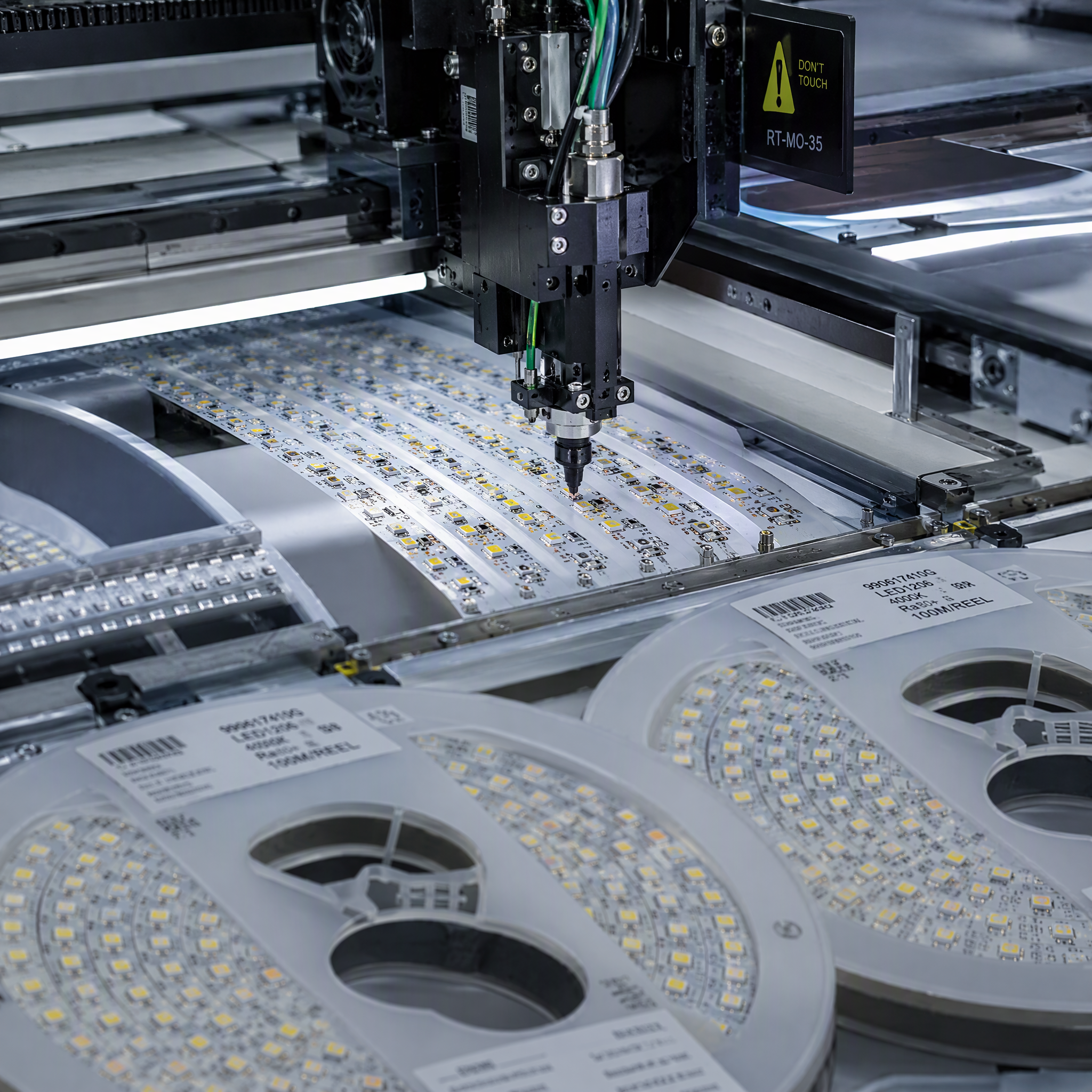
Understanding the core differences between diodes and leds helps engineers make informed decisions about component selection and system design. The fundamental distinction lies in their primary function: standard diodes control electrical current flow, while LEDs convert electrical energy into visible light. Recognizing these functional roles ensures proper circuit design, optimal performance, and cost efficiency across industrial applications from manufacturing to commercial lighting installations.
Core Functional Distinction Between Diodes and LEDs
Standard Diodes as Current Control Devices
Standard diodes serve primarily as one-way valves for electrical current. They allow current to flow in one direction while blocking it in the reverse direction, a property known as rectification. In power supplies and circuit protection, standard diodes prevent damage from voltage spikes and ensure current flows only when intended. This control function makes them essential in rectifier circuits, voltage regulation systems, and protection mechanisms where current management is the primary objective rather than light generation.
The junction behavior of semiconductor devices in standard diodes is optimized for efficient current blocking and minimal light emission. Engineers choose standard diodes specifically because they dissipate energy as heat rather than converting it to visible light. This characteristic makes them ideal for applications requiring stable voltage regulation, surge protection, and directional current flow without any light output requirement or distraction.
LEDs as Light Generation Devices
LEDs represent a specialized class of semiconductor light emitting devices designed to convert electrical current into visible light through electroluminescence. When forward-biased current passes through an LED junction, electrons recombine with holes, releasing energy as photons. This fundamental property makes LEDs superior for illumination tasks, indicator functions, and display applications where light generation is the primary goal. LED efficiency and performance metrics now dominate industrial lighting because they deliver controllable, directional light output with minimal heat waste.
The semiconductor structure of LEDs prioritizes light generation over current control. The materials, junction design, and geometry are engineered specifically to maximize light output per unit of current. This focus on photon emission rather than electrical switching represents the core functional difference that distinguishes LEDs from standard diodes and determines their suitability for lighting, signaling, and display applications across industries.
Photodiode Applications and Specialized Functions
Photodiodes as Light Detection Sensors
Photodiodes represent another specialized semiconductor light emitting category, though they primarily detect light rather than generate it. These devices function as light sensors, converting incident photons into electrical current proportional to light intensity. Photodiode applications span industrial automation, medical diagnostics, optical communication systems, and environmental sensing. In contrast to standard diodes and LEDs, photodiodes work in reverse-bias mode, making them sensitive to light rather than optimized for current control or light generation in the traditional sense.
The functional distinction becomes clear when comparing photodiode applications to LED efficiency and performance. While LEDs emit light when powered, photodiodes detect incoming light and convert it to measurable current. Industrial systems often use both technologies together, with LEDs providing illumination and photodiodes sensing reflected or transmitted light for feedback and control loops. This complementary relationship demonstrates how different semiconductor light emitting devices serve distinct functional roles within integrated automation systems.
Comparing Detection and Emission Functions
Understanding photodiode applications alongside LED efficiency and performance reveals a spectrum of semiconductor light emitting functionality. Detection-based photodiodes require stable reverse-bias voltage and deliver current output proportional to light exposure. Conversely, LEDs require forward-bias current input and deliver light output. Standard diodes operate independently of light, focusing purely on current control. These functional distinctions guide engineers toward appropriate component selection based on whether the application requires current management, light generation, or light detection.
Industrial systems increasingly combine all three semiconductor types. Manufacturing equipment uses standard diodes for power conditioning, LEDs for status indication and machine-readable lighting, and photodiodes for vision-based quality inspection. Recognizing these distinct functions prevents costly misapplications and ensures system reliability, efficiency, and performance across complex automated processes.
Performance Metrics and Selection Criteria
LED Efficiency and Performance Advantages
LED efficiency and performance have transformed industrial and commercial lighting over the past two decades. Modern LEDs convert seventy to ninety percent of input electrical energy into usable light, compared to incandescent bulbs that waste most energy as heat. This superior efficiency translates to reduced power consumption, lower cooling requirements, and significantly lower total cost of ownership across large-scale installations. For lighting-intensive industrial environments from warehouse facilities to manufacturing floors, LED efficiency and performance advantages justify capital investment in upgraded systems.
Performance metrics for LEDs include luminous efficacy measured in lumens per watt, color temperature stability, lifespan in operating hours, and thermal management capability. Standard diodes, by contrast, are evaluated on reverse breakdown voltage, forward voltage drop, and current capacity. These different metric sets reflect the fundamentally different functional purposes: diodes optimize for electrical control, while LEDs optimize for light generation. Matching component selection to application requirements ensures optimal system performance and prevents over-specification or under-specification costs.
Practical Selection Factors for Industrial Applications
When evaluating semiconductor light emitting devices for specific industrial applications, engineers must first determine whether the need is current control, light generation, or light detection. A circuit requiring voltage regulation demands a standard diode optimized for rectification. An application needing visible illumination or status indication requires LED efficiency and performance specifications. A system requiring ambient light monitoring needs photodiode sensitivity and response characteristics. This functional clarity prevents unnecessary component switching and ensures first-pass design success.
Cost considerations also align with functional distinctions. Standard diodes typically cost less than LEDs when measured per component, but LED efficiency and performance gains often deliver lower lifetime system costs through reduced energy consumption. Photodiode applications require specialized calibration and may command price premiums relative to basic diodes. Understanding these cost-performance relationships helps procurement specialists balance initial component pricing against system-level value and operational efficiency metrics.
FAQ
Are all LEDs considered diodes?
Yes, all LEDs are technically diodes because they are semiconductor devices with a p-n junction that conducts current in one direction. However, not all diodes are LEDs. Standard diodes are optimized for current control and voltage regulation, while LEDs are engineered specifically for light generation. The term 'diode' describes the fundamental semiconductor structure, while 'LED' describes the functional application of that structure for illumination purposes.
Can a standard diode be used as an LED substitute?
Standard diodes will not effectively replace LEDs in lighting applications because they do not emit sufficient visible light. While standard diodes do emit some photons due to electroluminescence, the junction design prioritizes current blocking over light generation, resulting in negligible output unsuitable for illumination. Additionally, standard diodes generate excessive heat relative to LEDs when carrying equivalent current, making them inefficient for any light-dependent function.
What role do photodiode applications play in LED systems?
Photodiode applications complement LED efficiency and performance in feedback and control systems. LEDs provide directed light output, while photodiodes detect that light for measurement, sensing, or communication purposes. In industrial automation, LEDs illuminate work areas or status indicators, and photodiodes verify light presence or measure intensity for quality control. Together, these semiconductor light emitting devices create complete optical sensing and signaling systems that drive automation accuracy and reliability.
 EN