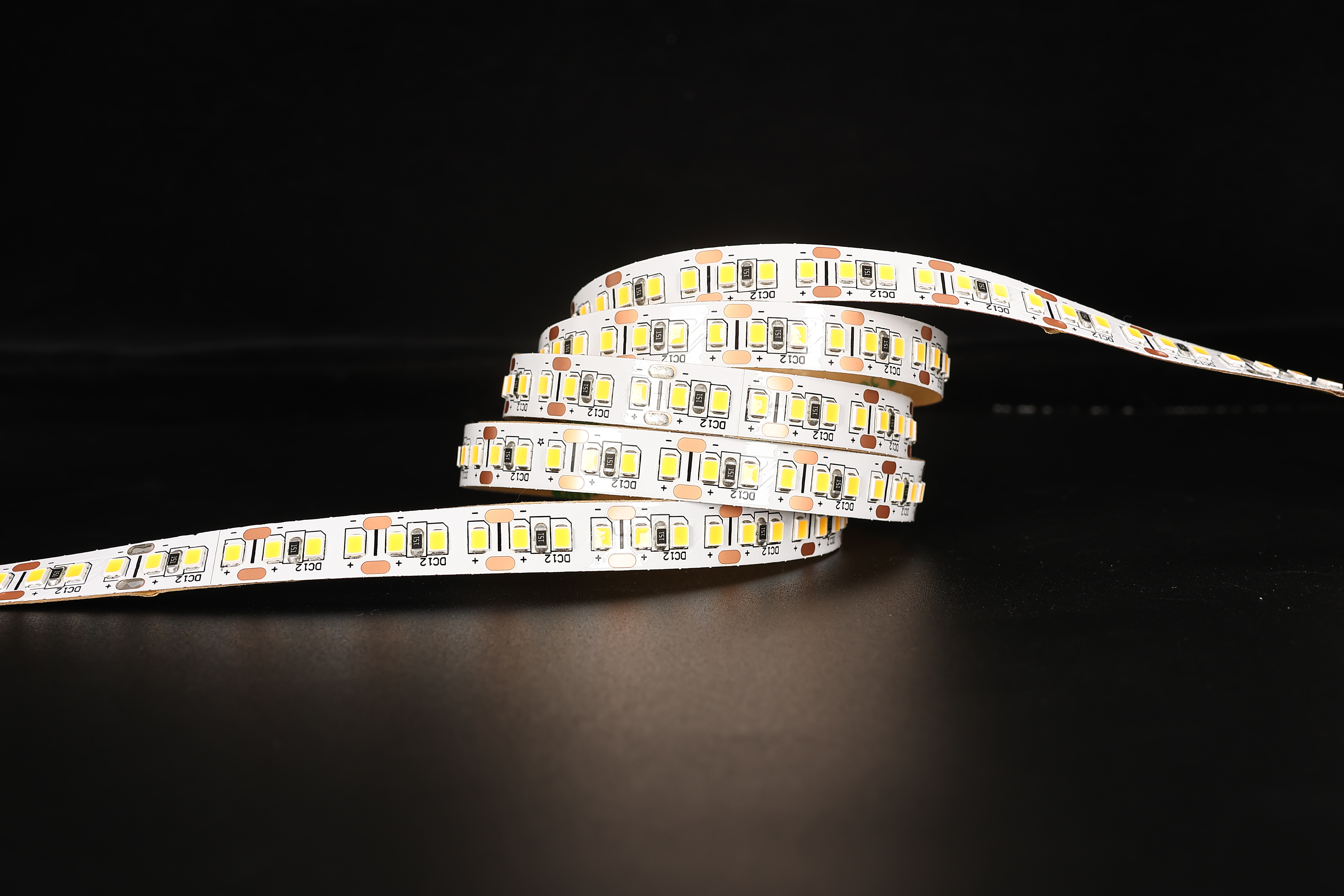
Semiconductor light emitting devices represent a cornerstone of modern electronics, yet they face numerous operational challenges in real-world applications. Understanding common problems with diodes and LEDs is essential for engineers, manufacturers, and system designers who depend on these components for critical applications. From thermal management issues to premature failure modes, the problems affecting these semiconductor light emitting devices span electrical, thermal, and mechanical domains. This comprehensive guide explores the most prevalent challenges, their root causes, and practical mitigation strategies that can improve reliability and performance across industrial and consumer applications.
The reliability of diodes and LEDs directly impacts system performance and total cost of ownership. Failures not only interrupt operations but can cascade into secondary damage in sensitive circuits. LED efficiency and performance degradation, thermal runaway conditions, and junction temperature management remain persistent challenges in both legacy and cutting-edge designs. This guide addresses the technical depth needed for informed decision-making in product selection, thermal design, and operational monitoring.
Thermal Management and Heat Dissipation Challenges
Junction Temperature Control in LED Efficiency and Performance
Excessive heat generation stands as one of the most critical problems affecting LED efficiency and performance across lighting applications. When current flows through the semiconductor junction, resistive losses generate heat that must be efficiently removed to maintain safe operating temperatures. Inadequate heat dissipation leads to junction temperature rise, which accelerates chemical degradation inside the semiconductor material, shortens device lifespan, and causes catastrophic failure.
The relationship between junction temperature and LED efficiency is non-linear; even moderate temperature increases can reduce light output by 5 to 10 percent. Poor thermal interface materials, inadequate heat sink attachment, and insufficient ambient cooling all contribute to this problem. Engineers must carefully calculate thermal resistance paths from the semiconductor junction through substrate, solder connections, mounting surfaces, and ultimately to the ambient environment.
Thermal Runaway and Failure Acceleration
Thermal runaway represents a catastrophic failure mode where increasing temperature causes higher current draw, which generates more heat in a self-amplifying cycle. This phenomenon is particularly dangerous because it can occur suddenly, even in circuits with seemingly adequate current limiting. For semiconductor light emitting devices operating at high brightness levels, thermal runaway can progress from normal operation to component destruction in seconds. The forward voltage of a diode decreases approximately 2 to 3 millivolts per degree Celsius; this negative temperature coefficient means hotter junctions draw more current when connected in constant-voltage circuits, accelerating the failure cascade.
Mitigation requires multiple design layers: temperature-compensated current sources, thermal monitoring circuits that reduce drive current above threshold temperatures, and robust heat sinks sized for worst-case ambient conditions. Industrial applications in high-temperature environments face compounded thermal stress, making thermal management not optional but mandatory for system reliability. Designers must also account for aging effects; as semiconductor light emitting devices age, their thermal resistance increases, requiring initial design margin well beyond minimum specifications to maintain performance throughout the product lifetime.
Light Output Degradation and Failure Modes
Luminous Flux Degradation Over Time
One of the most overlooked problems with diodes and LEDs is gradual light output degradation, even under normal operating conditions. Unlike incandescent bulbs that fail suddenly, LEDs experience slow but progressive loss of luminous flux, typically decreasing 30 to 50 percent over 50,000 hours of operation depending on junction temperature, drive current, and semiconductor material. This degradation results from crystal defects that form inside the semiconductor material, reducing the quantum efficiency of the emissive layer. Phosphor conversion efficiency also declines as phosphor particles age and absorb contaminants, compounding the light loss problem.
Color shift accompanies luminous degradation in many cases, particularly in white LEDs where blue-pump-based semiconductor light emitting devices exhibit color temperature drift toward yellow as phosphor efficiency declines. Applications requiring stable color points, such as medical imaging, museum lighting, or broadcast studios. Specifying LEDs rated for lower operating currents than maximum rated values provides margin for aging effects, but increases system cost and thermal footprint. Long-term reliability data becomes critical when designing systems with service intervals of multiple years.
Catastrophic Failure Mechanisms
Beyond gradual degradation, diodes and LEDs face several abrupt failure modes that can destroy components instantly. Electrostatic discharge represents a major threat; even modest ESD events can puncture the semiconductor junction, creating permanent short circuits that draw excessive current and rapidly overheat the surrounding material. Moisture ingress into device packaging causes corrosion of internal wire bonds and metallization, leading to open circuits or high-resistance faults.
Reverse voltage stress presents another failure mode; applying even modest reverse bias above the rated breakdown voltage can cause avalanche multiplication and thermal destruction. This risk escalates in systems with multiple diodes and LEDs in parallel strings where load sharing is unequal, forcing some devices to handle excess reverse voltage during switching transients. Proper circuit design with blocking diodes, transient suppression, and careful current-matching of parallel strings mitigates these risks.
Photodiode Applications and Detection Challenges
Photodiode Applications in Light Detection Systems
Photodiode applications introduce a distinct set of problems not encountered in LED light-emitting contexts. Photodiodes operate in reverse-bias mode to detect incident light, converting photons into electrical current for measurement and control systems. However, this detection mode creates sensitivity to bias voltage, temperature variations, and ambient light interference. Dark current, the leakage current flowing through a reverse-biased photodiode in complete darkness, increases exponentially with junction temperature at rates of roughly doubling for every 5 to 6 degrees Celsius of temperature rise.
Spectral response variation represents another critical problem in photodiode applications; semiconductor photodiodes exhibit peak sensitivity at specific wavelengths determined by their bandgap energy and junction depth. Applications requiring broadband light detection or sensitivity at non-peak wavelengths suffer reduced signal strength and degraded signal-to-noise ratios. Cross-talk in dense photodiode arrays, where light intended for one detector partially reaches adjacent diodes, introduces measurement errors and system-level signal corruption.
Signal Conditioning and Noise Management
Photodiode applications demand low-noise, high-gain transimpedance amplifiers to convert the minute photocurrent into usable voltage signals. Parasitic capacitance at the junction and PCB layout introduces frequency limitations and can cause oscillation in high-gain amplifier designs. Electromagnetic interference coupling into signal paths degrades measurement accuracy, particularly in industrial environments with variable frequency drives, switching power supplies, and high-current switching circuits. Proper shielding, careful PCB layout with guard traces, and differential signal routing help mitigate these problems, but add complexity and cost to photodiode applications.
Offset drift in photodiode applications manifests as slowly changing baseline signals unrelated to actual incident light, creating measurement errors that compound over hours or days of operation. Temperature compensation, periodic calibration, and careful component selection help manage this problem, but require design effort and ongoing maintenance. In automotive and industrial contexts where photodiode applications monitor ambient light or detect specific optical signals, these challenges demand robust system architecture that accounts for component variation, aging, and environmental stress.
FAQ
What are the primary failure modes of diodes and LEDs?
The primary failure modes include thermal runaway caused by insufficient heat dissipation, electrostatic discharge damage to semiconductor junctions, moisture ingress and corrosion of internal connections, reverse voltage breakdown, and gradual luminous degradation from crystal defects and phosphor aging. Catastrophic failures typically occur suddenly from ESD or electrical stress, while degradation failures develop progressively over months or years. Understanding which failure mode threatens your specific application allows targeted design improvements and preventive maintenance strategies.
How does temperature affect LED efficiency and performance?
Temperature directly degrades LED efficiency and performance through multiple mechanisms: junction temperature increases reduce light output efficiency by 0.5 to 1 percent per degree Celsius, forward voltage decreases approximately 2 to 3 millivolts per degree, and color temperature shifts toward red wavelengths as the semiconductor bandgap shrinks. Cumulative aging effects accelerate dramatically at elevated temperatures, potentially reducing rated lifespan from 50,000 hours at 25°C to just 10,000 hours at 85°C. Proper thermal management and design margin for heat dissipation are therefore non-negotiable for reliable operation and expected lifespan achievement.
What makes photodiode applications prone to signal degradation?
Photodiode applications suffer signal degradation from exponentially temperature-dependent dark current, spectral response variation across different wavelengths, parasitic capacitance limiting high-frequency response, and electromagnetic interference coupling into sensitive signal paths. Cross-talk between adjacent photodiodes in array applications introduces measurement errors, while offset drift develops slowly over time as semiconductor defects evolve. Successful photodiode applications require low-noise transimpedance amplifiers, careful thermal management, robust shielding, and periodic calibration to maintain measurement accuracy throughout system lifetime.
 EN