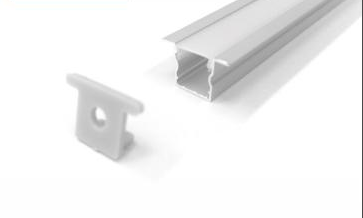
Selecting the correct led channel size is fundamental to the success of any linear LED lighting installation. Whether you are designing under-cabinet lighting, accent lighting, or integrated architectural illumination, the dimensions of your aluminum LED housing directly affect thermal performance, light distribution, aesthetic appearance, and long-term reliability. The calculation process involves understanding your LED strip specifications, thermal requirements, mounting constraints, and the optical properties of the aluminum led housing profile you select.
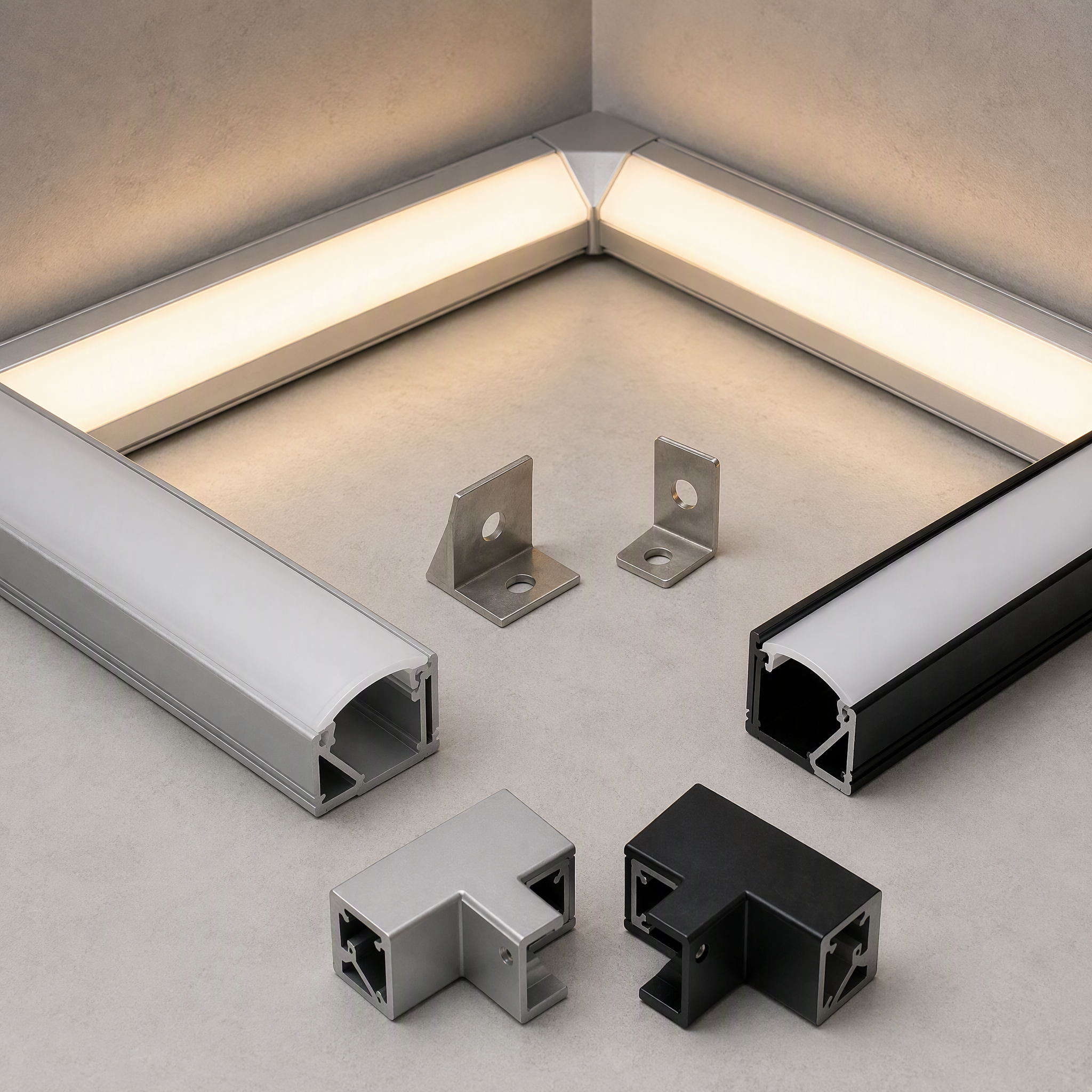
Properly sizing your linear LED lighting system prevents operational failures, extends component lifespan, and ensures optimal light output. An undersized aluminum led housing profile cannot dissipate heat efficiently, causing LED degradation and shortened service life. Conversely, an oversized profile creates unnecessary material waste and installation complexity. This guide walks you through the essential calculation steps, design considerations, and practical decision-making criteria that professionals use when specifying led channel dimensions for commercial and residential applications.
Understanding LED Strip and Channel Specifications
Identifying Your LED Strip Dimensions and Power Requirements
The first calculation step is documenting the exact width and thickness of your LED strip, along with its power consumption per unit length. Most LED strips measure between 8 and 12 millimeters in width, with thickness ranging from 2 to 3 millimeters. The power rating typically ranges from 4 to 15 watts per meter depending on LED density, brightness level, and color temperature. Your linear LED lighting strip manufacturer provides this specification data in technical documentation, and this information becomes the baseline for selecting an appropriate aluminum led housing profile that accommodates the strip while providing adequate thermal pathways.
Measuring Heat Dissipation Needs
Heat dissipation represents the most critical factor in led channel sizing calculations. LEDs generate significant heat during operation, and the aluminum led housing profile must conduct this thermal energy away from the diodes to maintain optimal performance. Calculate the total heat output by multiplying the power consumption per meter by the total run length of your linear LED lighting system. For example, a 10-meter run of 10-watt-per-meter LEDs produces 100 watts of thermal energy that must be dissipated. The led channel must provide sufficient mass and surface area to conduct this heat into the surrounding environment through natural convection or active cooling methods.
Calculating Thermal Resistance and Channel Mass
Determining Required Thermal Conductivity
Thermal resistance calculations guide your selection of aluminum led housing profiles with appropriate cross-sectional dimensions. LED manufacturers specify maximum operating junction temperatures, typically between 70 and 85 degrees Celsius. If your ambient temperature runs at 25 degrees Celsius, you have a 45 to 60 degree Celsius thermal budget to work within. Divide the total watts generated by your desired temperature differential to calculate the maximum allowable thermal resistance in degrees Celsius per watt. A 100-watt system with a 50-degree budget requires thermal resistance of 0.5 degrees per watt, which requires a substantial led channel profile with significant mass and surface area.
Selecting Appropriate Channel Geometry
The aluminum led housing profile cross-section directly determines thermal performance. Larger profiles offer greater surface area for heat dissipation and increased thermal mass for temperature buffering. Standard led channel profiles range from compact 16-millimeter-deep channels suitable for minimal applications to heavy-duty 40-millimeter-deep profiles used in high-power linear LED lighting systems. Professional thermal modeling software can calculate exact thermal resistance values for specific aluminum led housing geometries, but practical guidelines suggest that high-power installations exceeding 10 watts per meter typically require channels at least 25 millimeters deep to maintain acceptable operating temperatures.
Accounting for Installation Environment and Mounting
Environmental Temperature and Air Circulation Factors
Your installation environment significantly impacts led channel sizing calculations. Systems installed in enclosed cabinets experience reduced natural air circulation compared to open-air applications, requiring larger aluminum led housing profiles to compensate. Similarly, outdoor or industrial environments with extreme ambient temperatures demand different sizing approaches than climate-controlled interior spaces. Linear LED lighting systems in enclosed spaces may require aluminum led housing profiles one size category larger than open-air equivalents. Additionally, active cooling solutions such as small fans or ventilation gaps can reduce required led channel size by improving heat dissipation efficiency, allowing selection of more compact profiles while maintaining acceptable operating temperatures.
Space and Aesthetic Constraints
Real-world installations often face physical space limitations that restrict led channel options. Recessed applications demand compact aluminum led housing profiles that fit within tight cavities, potentially forcing trade-offs between ideal thermal performance and installation feasibility. In these scenarios, engineers balance thermal requirements with space constraints by selecting the largest feasible profile, often combining it with thermal management strategies such as thermal paste between the LED strip and the aluminum led housing, forced-air cooling, or reduced power levels to maintain acceptable performance within dimensional limits. The led channel profile must still accommodate the full width of your linear LED lighting strip while allowing proper diffuser or cover installation.
Making the Final Channel Selection
Matching Requirements to Standard Profiles
Manufacturers produce aluminum LED housing in standardized profiles to balance thermal performance with cost and availability. Your calculations narrow the selection to specific profile categories that meet your thermal, dimensional, and optical requirements. A typical choice process involves comparing three to five candidate led channel options and evaluating each against your calculated thermal resistance needs, available installation space, budget constraints, and aesthetic preferences. Most quality aluminum led housing profiles include data sheets specifying thermal resistance values, maximum recommended power levels per meter, and compatible diffuser options, allowing direct correlation between your calculations and available products.
Documentation and Quality Verification
Recording your calculation methodology and selected parameters ensures consistency across multi-unit installations and provides documentation for maintenance and troubleshooting. Verify that your selected led channel profile includes proper thermal interface materials such as adhesive thermal pads between the LED strip and the aluminum led housing profile, as these materials significantly impact actual thermal performance. Quality linear LED lighting installations include thermal measurement protocols to confirm that operating temperatures remain within specifications during initial commissioning. This verification step validates your sizing calculations and identifies any unexpected thermal challenges before the system operates under full production loads.
FAQ
What happens if my led channel is too small for the power level I need?
An undersized led channel cannot dissipate the thermal energy generated by your linear LED lighting system, causing junction temperatures to exceed safe operating limits. This leads to reduced LED lifespan, color drift, reduced brightness output, and premature component failure. In extreme cases, excessive heat causes LED and driver failures within months rather than years. The aluminum led housing profile must be sized correctly to prevent these failures.
Can I use passive cooling only for high-power linear LED lighting applications?
Very high-power linear LED lighting systems often require active cooling through forced-air ventilation or liquid cooling to maintain acceptable operating temperatures with reasonably sized aluminum LED housing profiles. Standard passive cooling through natural convection and aluminum led housing mass alone becomes insufficient above approximately 15 watts per meter in typical indoor environments. Active cooling solutions allow selection of more compact led channel profiles while maintaining proper thermal management.
How does ambient temperature affect my led channel size calculations?
Ambient temperature directly impacts the thermal differential available for heat dissipation. Higher ambient temperatures reduce the temperature margin between desired operating levels and maximum safe operating temperatures, requiring larger aluminum led housing profiles or reduced power levels. A linear LED lighting system designed for 25-degree-Celsius ambient conditions may require upsizing of the led channel profile or derating of power levels if installed in 40-degree-Celsius environments to maintain equivalent thermal performance and longevity.
 EN