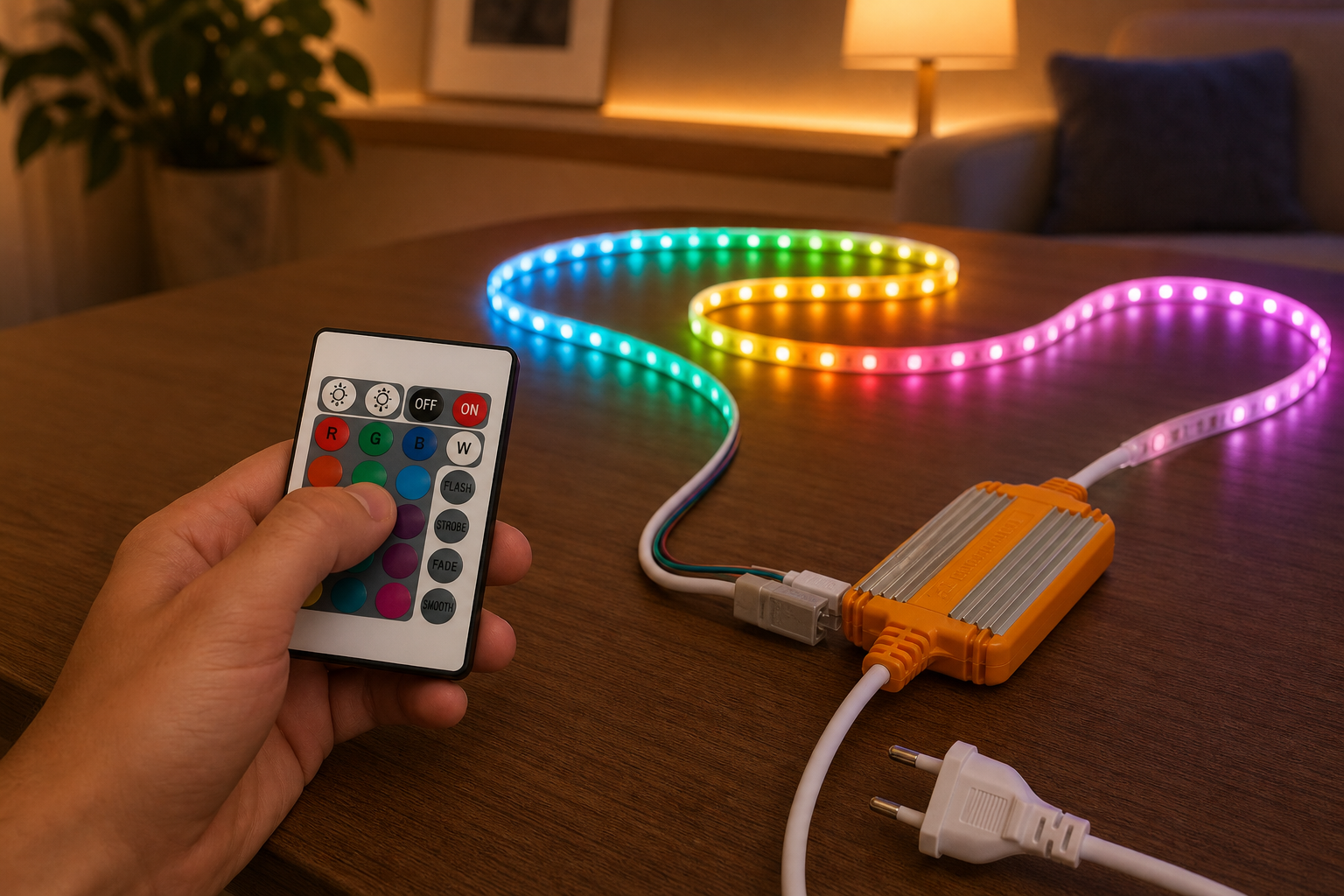
The lighting industry has undergone significant transformation with the introduction of advanced technologies, and understanding the distinctions between different LED options is essential for making informed purchasing decisions. A cob led strip represents a substantial evolution from traditional LED strip solutions, offering superior performance characteristics that address specific lighting requirements across residential, commercial, and industrial applications.
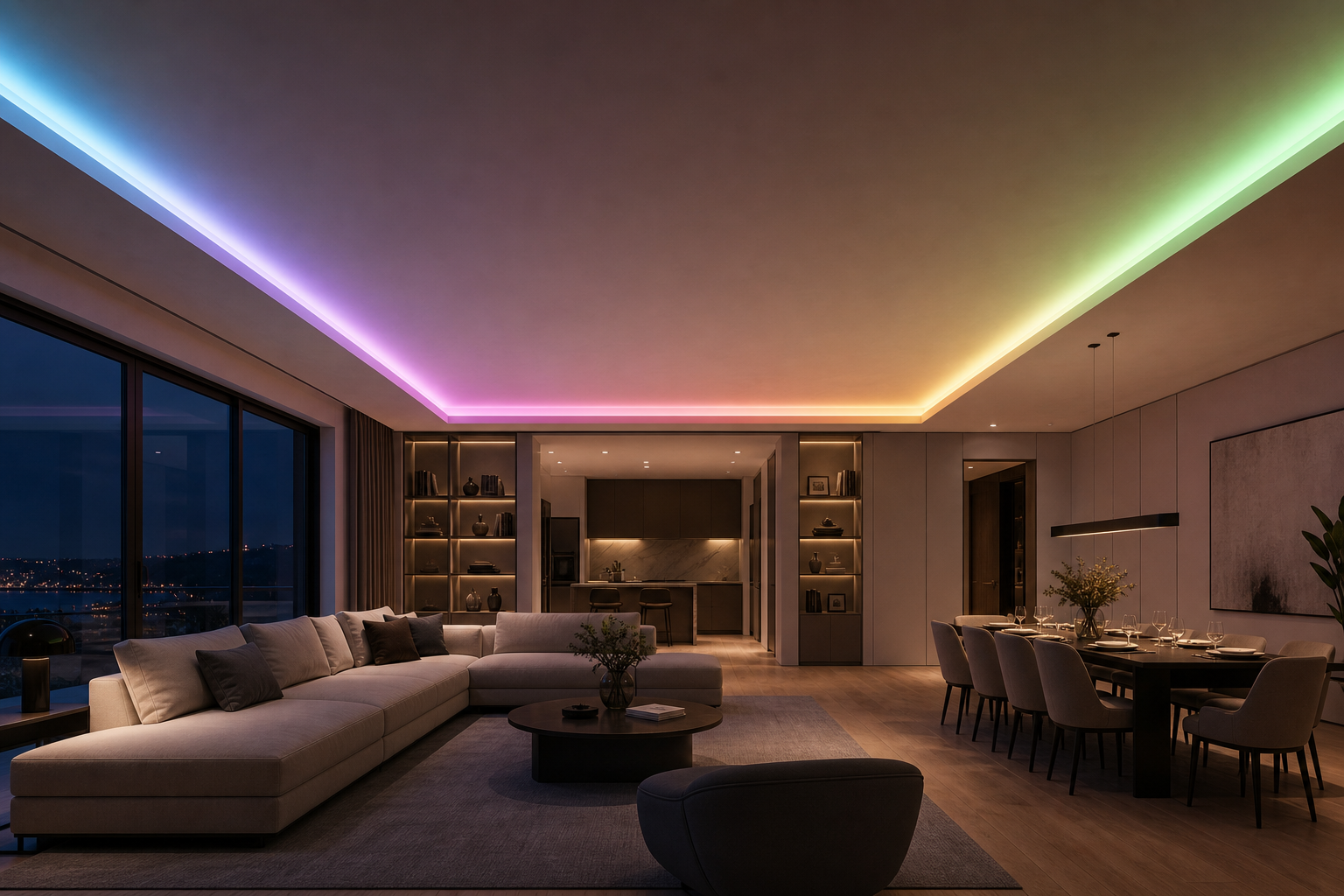
Standard LED strips have been the industry standard for years, utilizing discrete LED components mounted on a flexible substrate. However, the emergence of continuous LED tape technologies and high density LED strip alternatives has created new possibilities for achieving superior light quality, better thermal management, and more uniform illumination patterns. This article explores the fundamental differences between COB technology and conventional LED strips, helping you understand which solution best serves your specific lighting needs.
Understanding COB Technology and Traditional LED Construction
The Core Architecture of COB LED Strips
COB, or Chip-on-Board technology, represents a fundamentally different approach to LED strip design compared to traditional discrete LED components. In a high density LED strip utilizing COB technology, hundreds of individual LED chips are directly bonded onto a single substrate without individual packaging. This creates a seamless, densely packed light source that behaves almost like a continuous LED tape rather than a series of distinct light points.
The cob flexible lighting approach eliminates gaps between individual LEDs, resulting in smooth, uninterrupted illumination across the entire length of the strip. This dense packing of emitters provides significantly higher light output per unit length compared to standard configurations. The substrate itself often includes integrated thermal management components, allowing heat to dissipate more efficiently and ensuring consistent performance over extended operating periods.
How Standard LED Strips Function
Traditional LED strips employ discrete LED components, typically mounted at regular intervals along a flexible circuit board. Each individual LED operates independently, though they are electrically connected in series or parallel configurations. The spacing between these components creates the characteristic dotted or segmented appearance when viewed closely, and individual LED units are often separated by several millimeters.
Standard continuous LED tape configurations attempt to address this by reducing spacing between components, but they still rely on packaged LED units rather than the integrated chip-on-board approach. This fundamental difference in construction directly influences light quality, thermal performance, and overall illumination uniformity across the length of the strip.
Light Quality and Illumination Performance Characteristics
Uniformity and Visual Performance
One of the most noticeable differences between a cob led strip and standard LED options becomes immediately apparent in their light distribution patterns. The high density LED strip design creates seamless, uniform illumination without visible hotspots or dark areas between individual LEDs. This continuous light output is particularly valuable in applications where visual consistency is critical, such as accent lighting, display backlighting, and architectural installations.
Standard LED strips, even those marketed as continuous LED tape, typically produce visible segment patterns when viewed from certain angles or at close distances. This segmentation becomes more pronounced in lower-light environments or when strips are positioned near reflective surfaces. For professional-grade applications requiring pristine aesthetics, the superior uniformity of COB technology provides a significant competitive advantage.
Color Rendering and Light Quality
The high density LED strip technology enables manufacturers to achieve superior color rendering index values compared to traditional discrete LED configurations. By integrating multiple color channels directly on the substrate, cob flexible lighting solutions can deliver more accurate color representation and smoother color mixing across the full spectrum. This translates to more natural, vibrant, and true-to-life lighting output.
The closer proximity of individual chips in a COB arrangement allows for better color uniformity along the length of the strip, reducing the color temperature variations that sometimes occur in standard LED strips. For applications requiring consistent color output, such as retail displays or photography lighting, this characteristic provides measurable quality advantages over conventional solutions.
Thermal Management and Operational Efficiency
Heat Dissipation Performance
Thermal management represents one of the most critical technical distinctions between a cob led strip and traditional LED strips. The integrated substrate design of continuous LED tape technologies includes optimized pathways for heat transfer, allowing thermal energy to dissipate more rapidly and uniformly. This enhanced heat management capability extends the operational lifespan of the LEDs and maintains consistent light output over extended operating periods.
Standard LED strips often rely on individual component packaging and simpler substrate designs, which can create thermal bottlenecks and localized heat accumulation. The cob flexible lighting approach distributes thermal load more evenly, reducing stress on individual components and minimizing the risk of premature degradation or performance loss during extended use cycles.
Efficiency and Power Consumption
A high density LED strip typically delivers superior luminous efficacy, producing more light per watt of electrical input compared to standard LED configurations. This efficiency advantage stems from improved optical design, reduced losses in the light path, and optimized thermal performance. For applications operating continuously or across extended hours, the energy consumption differences can translate into measurable cost savings and reduced environmental impact.
The integration of thermal management in COB designs also prevents the efficiency degradation that occurs when discrete LED components operate at elevated temperatures. Standard strips may experience declining efficiency over time as thermal accumulation affects component performance, whereas cob flexible lighting solutions maintain more consistent performance characteristics throughout their operational life.
Installation and Application Flexibility
Mounting and Design Considerations
While both cob led strip and continuous LED tape options offer flexible installation capabilities, the construction differences influence their suitability for various applications. The uniform illumination of high density LED strip technology makes it particularly attractive for applications where light quality and visual consistency are paramount. The integrated design also simplifies installation in some scenarios, as the seamless light output eliminates the need for diffusers or additional optical components in certain applications.
Standard LED strips may require additional optical modifications, such as diffuser covers or secondary optics, to achieve uniform illumination in specific applications. The cob flexible lighting technology can sometimes eliminate these additional components entirely, simplifying the overall system design and reducing installation complexity and material costs.
Application Scenarios and Suitability
The superior performance characteristics of COB technology make it particularly well-suited for demanding applications including under-cabinet kitchen lighting, architectural accent lighting, display backlighting, and high-end retail environments. A continuous LED tape approach utilizing COB technology addresses the limitations of standard solutions in applications where visual perfection and light quality are non-negotiable.
Standard LED strips remain appropriate for general-purpose applications, outdoor environmental lighting, and situations where discreteness in lighting appearance is acceptable or desirable. The choice between cob led strip and standard options ultimately depends on specific application requirements, visual standards, and performance expectations rather than any objective superiority of either technology across all scenarios.
FAQ
What specific advantages does a high density LED strip provide over standard alternatives?
A high density LED strip utilizing COB technology delivers superior light uniformity, better color rendering, improved thermal management, and enhanced energy efficiency. The seamless light output eliminates visible gaps between individual LEDs, creating a continuous light source that produces professional-grade illumination suitable for demanding applications. Thermal performance improvements extend component lifespan and maintain consistent output quality over time.
Can cob flexible lighting serve as a direct replacement for standard LED strips in existing installations?
In most cases, a cob led strip can serve as a direct replacement for standard LED strips in terms of electrical compatibility and physical dimensions, though specific voltage and current requirements should be verified. However, the superior light quality characteristics of COB technology mean installations designed for standard strips may not fully leverage the performance advantages of continuous LED tape options. For retrofit applications, evaluation of existing optical components and diffuser requirements is recommended.
What factors should drive selection between COB and standard LED strip technologies?
Selection between cob flexible lighting and standard solutions should prioritize application-specific requirements including desired light quality uniformity, color rendering standards, thermal performance needs, and budget constraints. Applications demanding pristine aesthetics, precise color accuracy, or extended operational life benefit significantly from high density LED strip technology. Standard continuous LED tape remains appropriate for general-purpose applications where performance differences provide minimal practical value.
 EN