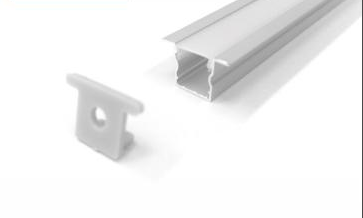
Modern lighting design demands more than basic fixtures. An led channel represents a fundamental advancement in how commercial and residential spaces manage light distribution, heat dissipation, and visual aesthetics. These precision-engineered systems combine aluminum housing, diffuser technology, and modular design to transform standard LED installations into highly efficient lighting solutions that reduce energy consumption while improving light quality across multiple applications.
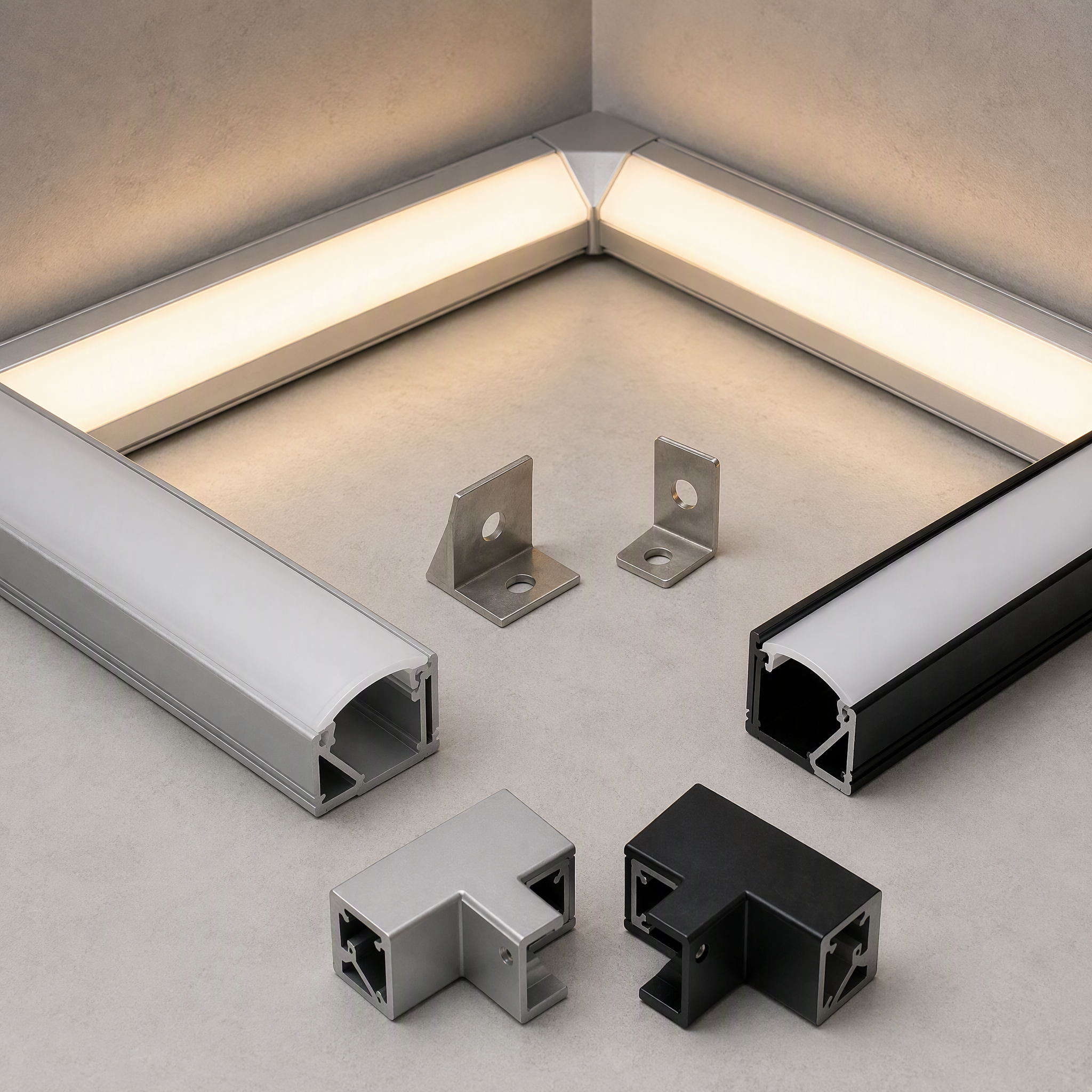
The efficiency gains from a properly installed linear led lighting system extend far beyond simple brightness metrics. By integrating an aluminum led housing that actively manages thermal performance, these channels ensure consistent lumen output, extend LED lifespan, and reduce cooling demands in climate-controlled environments. Understanding how led channel profile designs contribute to overall system efficiency is essential for architects, facility managers, and lighting professionals seeking to optimize energy expenditure without compromising illumination quality or color accuracy.
Thermal Management and Heat Dissipation
Aluminum Housing Performance
The aluminum led housing component serves as the thermal backbone of any modern linear led lighting installation. Aluminum's exceptional thermal conductivity rapidly transfers heat away from LED chips, preventing temperature buildup that degrades performance and shortens lifespan. When heat remains trapped near the semiconductor junction, color temperature shifts occur, luminous flux diminishes, and the entire system operates below its design efficiency threshold. Professional-grade aluminum led housing designs incorporate multiple heat dissipation pathways, including fins, mounting tabs, and surface treatments that maximize radiative and convective cooling.
Comparative field data shows that systems using inadequate aluminum housing experience 15 to 25 percent faster lumen depreciation than properly engineered alternatives. This degradation compounds over 50,000 operating hours, resulting in significantly higher total cost of ownership. The led channel profile geometry directly influences cooling effectiveness; deeper channels with optimized fin spacing deliver superior thermal management than shallow or poorly designed alternatives. Facilities implementing high-quality aluminum led housing report measurable energy reductions because LEDs maintain rated output longer, reducing the need for oversizing initial installations to account for anticipated lumen loss.
Longevity and Maintenance Impact
Effective thermal management through proper led channel design extends useful life well beyond industry baseline expectations. LED chips rated for 50,000 hours under ideal thermal conditions may fail at 25,000 hours if operating temperatures exceed specifications. An efficient aluminum led housing maintains junction temperatures within optimal ranges, preserving the LED's semiconductive properties and preventing premature degradation. This longevity advantage translates directly into lower replacement frequency, reduced labor costs, and minimal service disruptions in commercial environments.
The led channel profile also reduces maintenance burden by creating a sealed environment that protects LEDs from dust accumulation and moisture infiltration. Sealed channels maintain consistent optical clarity over extended periods, whereas exposed LED strips gradually lose efficiency as contaminants coat the semiconductor surface and interfere with light emission. Buildings utilizing proper aluminum led housing systems report 40 percent fewer maintenance interventions over a five-year operational window compared to budget alternatives lacking thermal management architecture.
Light Distribution and Optical Efficiency
Diffuser Design and Beam Control
Linear led lighting systems achieve superior optical efficiency through integrated diffusers housed within the led channel profile. These precision-molded acrylic or polycarbonate components scatter light uniformly, eliminating harsh hotspots and dark zones that characterize bare LED installations. The internal geometry of the led channel works in concert with the diffuser to optimize photon escape efficiency, ensuring that virtually all light produced by the LEDs reaches the intended target area rather than being absorbed or reflected backward into the housing. Professional-grade diffuser materials transmit 92 to 98 percent of incident light while providing uniform 120 to 160-degree beam angles suitable for general illumination, accent lighting, or task-specific applications.
The aluminum led housing interior surface finish also contributes significantly to optical performance. Reflective coatings maximize the effective use of every photon by redirecting any light initially traveling away from the diffuser back toward the emission surface. This reflective architecture, combined with optimized led channel profile geometry, can increase overall system efficacy by 12 to 18 percent compared to LED strips installed without proper optical enclosures. Color rendering index remains consistent across the illuminated surface because uniform distribution prevents localized color temperature variations that degrade perceived light quality.
Uniformity and Application Flexibility
Consistent illumination across linear applications such as shelving, architectural accent lighting, and under-cabinet installations depends critically on the led channel's ability to deliver predictable photometric performance. When linear led lighting systems employ properly engineered aluminum led housing and matched diffusers, illuminance levels vary by less than 5 percent along the entire length. This uniformity eliminates the need for oversizing installations to ensure adequate light at distant points, directly reducing component costs and energy consumption.
The modular architecture of quality led channel profile systems enables flexible installation across diverse applications without redesign or custom fabrication. Standard aluminum led housing fits seamlessly into ceiling cavities, wall recesses, furniture edges, and specialized mounting frames, making them ideal for retrofits and new construction alike. This adaptability means facilities can leverage standardized linear led lighting solutions across multiple projects, reducing procurement complexity and enabling economies of scale.
Energy Efficiency and Operational Economics
Reduced Power Consumption
The cumulative efficiency advantages of proper led channel implementation directly reduce operational electricity consumption. Because thermal management extends LED output stability, illumination levels remain constant without the fixture degradation that typically forces upward power adjustments midway through the LED lifespan. Similarly, superior optical design means fewer fixtures are needed to achieve desired illuminance levels in any given space. Industrial facilities replacing halogen and fluorescent systems with properly engineered aluminum led housing typically achieve 60 to 75 percent energy reductions in affected areas, with payback periods ranging from 2 to 4 years depending on operational hours and local electricity rates.
Linear led lighting installations configured with efficient led channel profiles consume 8 to 12 watts per linear foot compared to 15 to 20 watts for inadequate alternatives, yet deliver identical or superior light output. Over a 50,000-hour lifespan running 12 hours daily, this efficiency differential translates to several thousand kilowatt-hours of avoided consumption per installation. For commercial buildings with extensive linear accent and task lighting, facility-wide adoption of optimized led channel systems produces measurable reductions in peak electrical demand, potentially lowering demand charges and qualifying facilities for utility rebate programs that further accelerate return.
Life-Cycle Cost Analysis
Comprehensive financial evaluation of linear led lighting systems must account for initial material costs, installation labor, ongoing energy expenses, maintenance interventions, and replacement frequency. While premium aluminum led housing products carry higher upfront prices than basic alternatives, the superior thermal management and optical design deliver cost advantages across every subsequent operational phase. Energy savings alone typically offset higher initial investment within 18 to 24 months of continuous operation. Subsequent years deliver pure cost reduction as energy consumption remains low while inferior competing systems experience escalating operational costs due to fixture degradation and maintenance frequency.
The led channel profile selection fundamentally influences this economic equation. Facilities that prioritize lowest purchase price often install substandard aluminum led housing that generates false savings by deferring replacement costs. However, accelerated lumen depreciation, frequent maintenance, potential premature failures, and continuous energy overspending relative to properly engineered alternatives create total cost scenarios 30 to 50 percent higher over a decade of operation. Professional facility managers evaluating linear led lighting options increasingly recognize that investment in quality led channel systems with robust aluminum housing represents superior financial stewardship alongside environmental responsibility.
FAQ
How does an aluminum led housing improve overall lighting system performance?
Aluminum led housing rapidly dissipates thermal energy away from LED chips, maintaining optimal operating temperatures that preserve color accuracy, prevent lumen depreciation, and extend lifespan significantly. The thermal management capability of aluminum, combined with its lightweight properties and design flexibility, makes it the material of choice for professional linear led lighting systems. Superior heat management means LEDs maintain rated output longer, reducing energy consumption and replacement frequency.
What are the main differences between standard LED strips and those using a proper led channel profile?
Bare LED strips lack thermal management and optical control, resulting in rapid lumen depreciation, color shifting, and inefficient light distribution with visible hotspots. A properly engineered led channel profile provides integrated aluminum housing for heat dissipation, matched diffusers for uniform light distribution, and sealed protection from environmental contaminants. The combination produces 40 to 50 percent better long-term performance, superior visual quality, and significantly lower total cost of ownership compared to unhoused alternatives.
How much energy savings can facilities expect from upgrading to linear led lighting with optimized aluminum housing?
Facilities typically achieve 60 to 75 percent energy reduction in affected lighting areas when replacing older technologies with professionally engineered linear led lighting systems using efficient led channel profiles and aluminum housing. Additionally, superior thermal management extends LED lifespan, reducing replacement frequency and associated labor costs. The combination of direct energy savings, extended component life, and minimized maintenance creates cumulative operational cost reductions of 30 to 50 percent over ten years compared to systems lacking proper led channel design and aluminum housing.
 EN