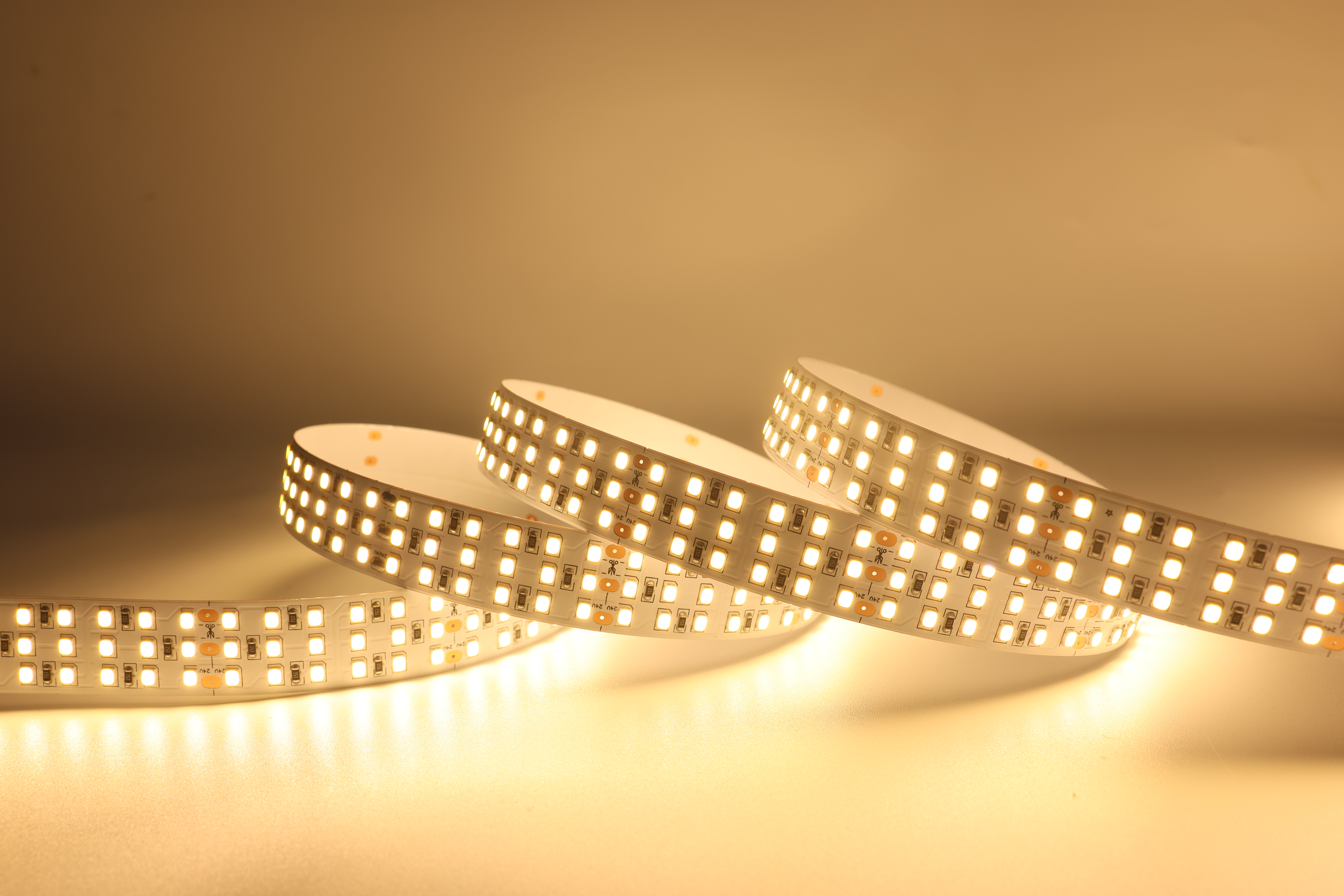
Understanding daily energy consumption is critical for anyone considering tape light installations. Whether you're planning under-cabinet lighting for a kitchen, accent lighting for a retail space, or task lighting for industrial applications, knowing the power draw of your adhesive strip lights helps you budget for electricity costs and assess the overall sustainability of your lighting solution. Most modern LED tape light products consume between 4 to 14 watts per meter, depending on the type, brightness level, and color temperature specifications.
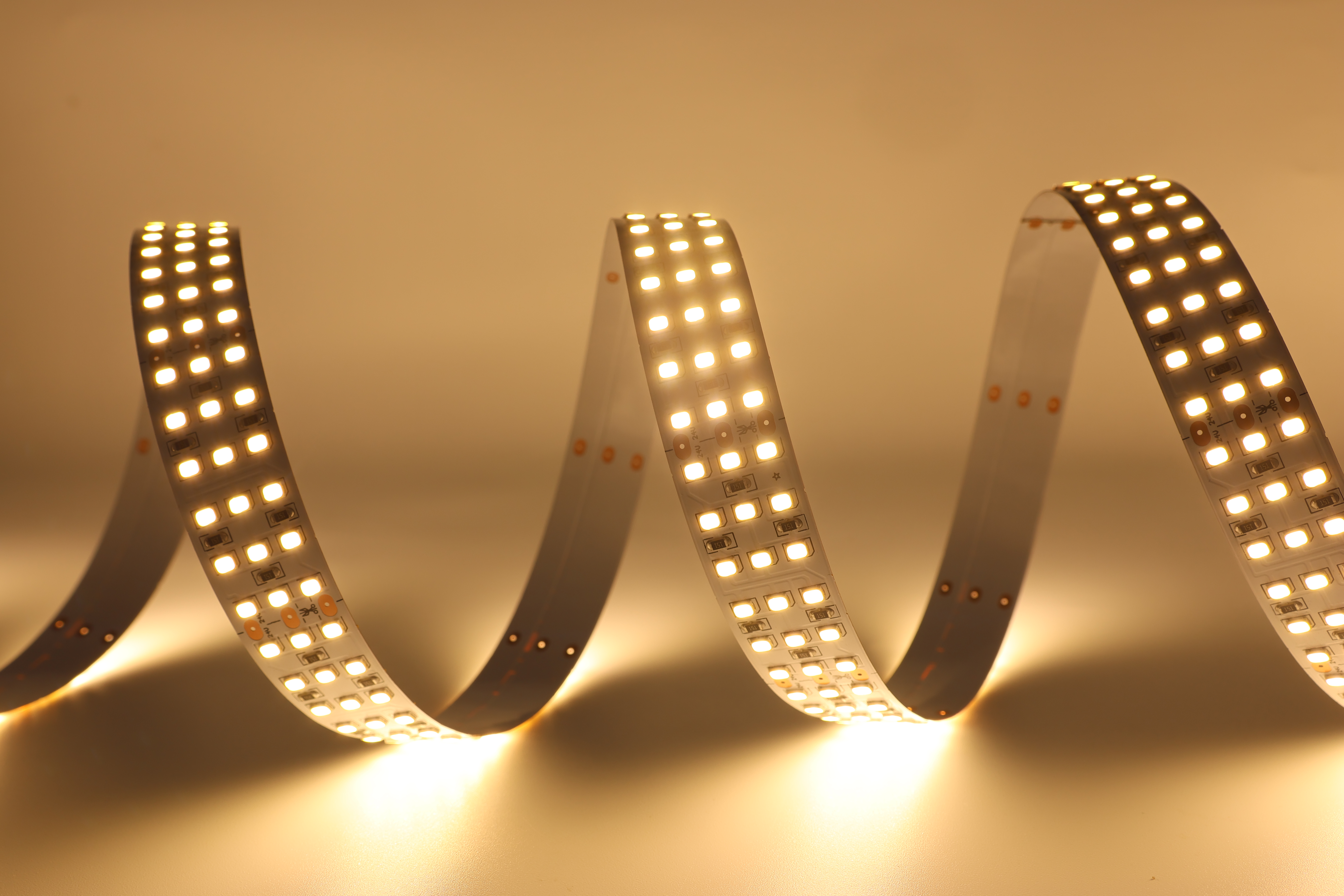
LED tape lighting has become the industry standard for energy-efficient lighting solutions across residential, commercial, and industrial settings. The shift from traditional incandescent and fluorescent sources to flexible light strips represents a significant advancement in reducing operational electricity costs. By understanding the precise energy requirements of your chosen flexible light strips, you can make informed decisions about installation length, operating hours, and system configuration to optimize both performance and cost-effectiveness.
Energy Consumption Factors for Tape Lighting
Power Ratings and Specifications
LED tape lighting power consumption is measured in watts per meter, and this baseline varies considerably based on several technical specifications. Standard 5050 SMD (surface-mounted diode) flexible light strips typically draw 4.8 to 7.2 watts per meter, while 3528 SMD options consume 2.4 to 3.6 watts per meter. Higher-performance adhesive strip lights using 5630 or COB (chip-on-board) technology may reach 10 to 14 watts per meter for superior brightness and color rendering. The voltage system, whether 12V DC or 24V DC, also influences energy efficiency; 24V systems typically demonstrate lower resistive losses and improved efficiency across longer installations compared to 12V systems.
Brightness Level and Color Output
The brightness you select directly impacts daily energy usage of your tape light installation. A 60-LED per meter flexible light strips unit operating at full brightness will consume more power than a 30-LED configuration. Single-color LED tape lighting generally uses less power than RGB or tunable white options, which require additional driver complexity and circuitry. For applications requiring warm white (2700K) output, adhesive strip lights typically run more efficiently than cool white (6500K) LEDs at equivalent brightness levels, though the difference remains relatively modest in well-designed systems.
Calculating Daily Energy Consumption
Practical Calculation Method
To determine your actual daily energy consumption, multiply the power rating of your flexible light strips by the installation length and daily operating hours. For example, a 5-meter LED tape lighting system rated at 7 watts per meter draws 35 watts total. If you operate this installation for 8 hours daily, your consumption is 0.28 kilowatt-hours (kWh) per day, or approximately 8.4 kWh monthly. Most standard adhesive strip lights rated between 5 and 10 watts per meter will cost between $0.20 and $0.50 per month in electricity when operated 8 hours daily, assuming average utility rates of $0.12 per kWh.
Monthly and Annual Projections
Scaling your daily consumption to longer periods reveals the true cost implications of tape light systems. A 10-meter installation consuming 70 watts continuously for 10 hours daily results in 0.7 kWh daily, 21 kWh monthly, and 252 kWh annually. At typical commercial rates, this translates to approximately $30 per year in electricity costs. When evaluating flexible light strips for commercial applications, the cumulative energy impact across multiple installations becomes significant; understanding these numbers ensures proper budgeting and helps identify opportunities for efficiency improvements through scheduling, dimming, or configuration adjustments.
Efficiency Optimization and Cost Reduction
Driver Efficiency and System Design
The power supply or driver converting your input voltage to the LED tape light specifications significantly influences overall system efficiency. High-quality drivers operating at 85 to 95 percent efficiency lose less energy as heat compared to budget units operating at 70 to 80 percent efficiency. Oversized power supplies running at partial load operate less efficiently than properly matched units; selecting the correct driver wattage for your adhesive strip lights installation ensures optimal energy use. For adhesive strip lights spanning 15 meters or longer, using 24V systems with appropriate segmentation reduces voltage drop losses and improves the effective energy efficiency of your flexible light strips installation.
Operating Schedule and Dimming Strategies
Strategic scheduling dramatically reduces daily energy consumption of tape light systems without sacrificing functionality. Motion sensors and programmable timers can cut operating hours by 20 to 40 percent in spaces with variable occupancy. Dimming your LED tape lighting to 75 percent brightness reduces power draw by approximately 15 to 20 percent while maintaining acceptable illumination for most applications. Many modern flexible light strips support PWM (pulse-width modulation) dimming or 0-10V analog dimming, enabling sophisticated control strategies that balance lighting quality with energy efficiency. Combining dimming with scheduling creates compounding benefits, potentially reducing total annual energy consumption by 40 to 50 percent compared to continuous full-brightness operation.
FAQ
How many watts does a typical 1-meter tape light strip consume?
A standard 1-meter LED tape lighting strip consuming between 5 and 10 watts per meter draws 5 to 10 watts continuously when powered. This translates to approximately 0.005 to 0.01 kWh per hour of operation. Adhesive strip lights using premium COB technology or high-density LED configurations may consume up to 14 watts per meter, while budget flexible light strips with fewer LEDs might use as little as 2 to 3 watts per meter.
Can tape light run 24 hours daily without increasing electricity costs substantially?
Running your tape light continuously for 24 hours daily triples energy consumption compared to 8-hour operation, directly tripling electricity costs. A 50-watt LED tape lighting system operated 24 hours daily consumes 1.2 kWh daily or approximately 36 kWh monthly, costing roughly $4.32 monthly at standard rates. For most applications, using motion sensors or intelligent scheduling to limit operating hours to 8 to 12 hours daily provides better cost balance than continuous operation without compromising functionality.
Is LED tape lighting more energy-efficient than traditional under-cabinet lighting?
LED tape lighting consumes 60 to 80 percent less energy than equivalent-brightness halogen or incandescent under-cabinet fixtures. Traditional 20-watt halogen puck lights provide similar brightness to 5-watt adhesive strip lights, making flexible light strips the substantially more efficient choice. When combined with dimming and scheduling capabilities unique to modern LED tape lighting systems, the energy efficiency advantage over traditional lighting technologies becomes even more pronounced, often resulting in payback periods of 12 to 24 months through electricity savings alone.
 EN