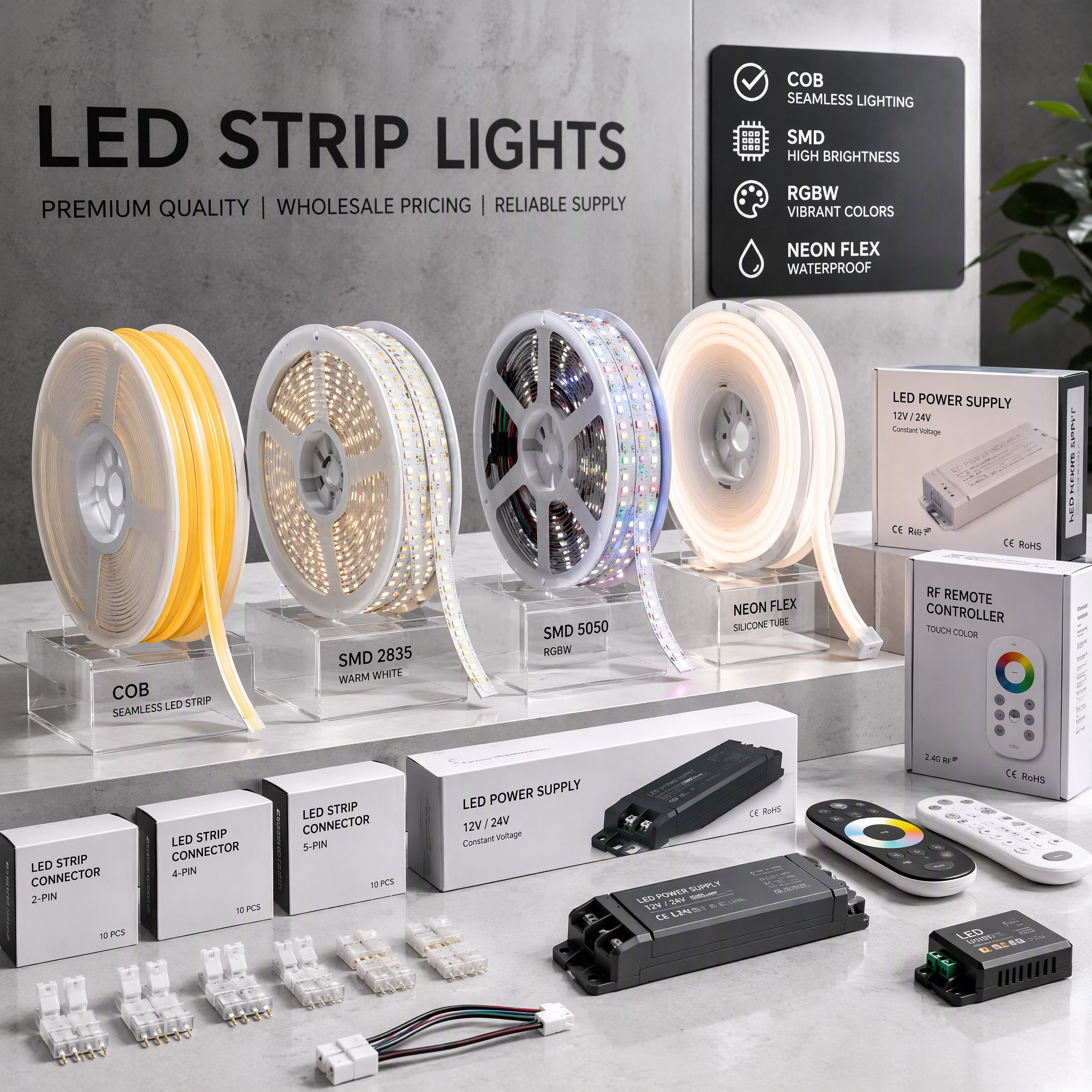
Selecting the correct power supply is fundamental to achieving reliable performance from your cob led strip installation. A high density led strip demands precise electrical specifications to operate safely and deliver consistent brightness across the entire run. Understanding power consumption, voltage compatibility, and current capacity ensures your continuous led tape system functions optimally without risk of overheating, dimming, or component failure.
The power supply you choose directly impacts the lifespan, color accuracy, and light output of your high density led strip system. Undersized or incompatible supplies cause voltage sag that dims the light and strains internal circuits, while excessive current can damage the cob flexible lighting elements. This guide walks you through calculating exact power requirements, matching voltage standards, and selecting a supply rated for continuous operation under real-world conditions.
Voltage and Current Specifications for COB LED Strip Systems
Understanding Standard Voltage Requirements
Most cob led strip products operate at either 12V DC or 24V DC, with 24V being the industry standard for longer runs and professional installations. A 24V continuous led tape allows longer wire runs without voltage drop, making it ideal for under-cabinet, accent, and display lighting applications. The higher voltage also reduces current draw, which means thinner gauge wires can safely deliver power across 10+ meters without performance loss.
When specifying your power supply, verify the exact voltage rating required by your cob flexible lighting product. Using a 12V supply with a 24V high density led strip will result in no illumination, while using excessive voltage damages the LED chips and driver circuitry. Always match the power supply voltage precisely to your continuous led tape specifications listed in the product datasheet.
Current and Amperage Calculation
Current draw depends on the LED density, color temperature, and brightness setting of your cob led strip. A typical high density led strip with 60 LEDs per meter at maximum brightness requires approximately 12–15 watts per meter, translating to roughly 0.5–0.6 amps at 24V. To calculate total current, multiply the wattage per meter by your total meter length, then divide by the supply voltage to determine amps required.
For a cob flexible lighting installation spanning 5 meters with 15W per meter output, total wattage is 75W. Divided by 24V, this yields approximately 3.1 amps needed. Always select a power supply rated for at least 20–30% higher than your calculated demand to avoid operating at maximum capacity, which reduces lifespan and creates thermal stress on the continuous led tape system.
Power Supply Wattage Selection and Load Planning
Calculating Total Wattage Requirements
Wattage represents the total electrical energy your high density led strip consumes. A cob led strip running at full brightness draws consistent power, unlike incandescent or halogen sources. To find the exact wattage, check your product specifications for power consumption per meter or per segment, then multiply by the total length of continuous led tape you plan to install.
If your cob flexible lighting spec lists 15W/meter and your installation covers 8 meters, total power demand is 120W. Your power supply must be rated for at least 120W, preferably 150W to provide operational headroom. Oversizing by 25–30% protects the supply from thermal stress and ensures stable voltage even if future expansions to your continuous led tape system occur.
Selecting Supplies with Appropriate Safety Margins
Industrial-grade power supplies designed for high density led strip applications include built-in protections: short-circuit cutoff, over-temperature shutdown, and voltage regulation to maintain stable output under varying load conditions. A quality cob led strip power supply rated 150W will safely handle 120W of cob flexible lighting without risk, maintaining voltage stability across the entire continuous led tape run.
When selecting a power supply for your high density led strip, prioritize units with active voltage regulation, thermal protection, and certified efficiency ratings above 85%. These features ensure your cob flexible lighting operates at consistent brightness, color temperature, and output for years without degradation. Cheap, unregulated supplies cause visible flicker and color shift, especially noticeable on continuous led tape used in retail or display environments where consistency is critical.
Wire Gauge, Distance Considerations, and Installation Best Practices
Voltage Drop and Wire Selection
Wire gauge critically affects power delivery to your cob led strip over longer distances. Resistance in thin wires causes voltage drop, meaning the actual voltage reaching your high density led strip diminishes as distance from the power supply increases. For a 24V continuous led tape system running 5 meters at 3 amps, a 18 AWG wire delivers acceptable voltage; beyond 10 meters at the same current, you must upgrade to 14 AWG or thicker to prevent the last segments of your cob flexible lighting from appearing dimmer.
Calculate voltage drop using the formula: Voltage Drop = (2 × Length × Current × Resistance per foot) / 1000. For most high density led strip installations, aim for no more than 2–3% voltage drop at maximum brightness. If your calculation suggests higher drop, upgrade your wire gauge immediately; undersized wiring is a common cause of uneven brightness across continuous led tape runs and accelerates power supply failure.
Installation Wiring and Safety Protocols
Always connect your cob led strip to a dedicated power supply through a main disconnect switch and appropriate protection devices. For a high density led strip drawing over 2 amps, use a fused connection or circuit breaker rated for that current to prevent fire risk if the cob flexible lighting or continuous led tape develops a fault. Ensure all wire connections are soldered and insulated to prevent corrosion and short circuits.
Position your power supply in a well-ventilated location away from moisture and extreme temperatures. Most cob led strip power supplies are rated for 0–40°C ambient operation; placing the supply in direct sunlight or a confined space reduces its cooling capacity and triggers premature thermal shutdown of your high density led strip system. Proper installation practices extend supply lifespan and ensure reliable operation of your continuous led tape lighting.
FAQ
Can I use a 12V power supply for a 24V COB LED strip?
No, using a 12V supply on a 24V cob led strip will result in no illumination or extremely dim output. The high density led strip requires the precise voltage to activate its internal drivers and LED circuits. Always match the power supply voltage exactly to your cob flexible lighting product specifications to avoid permanent damage to the continuous led tape components.
How much reserve capacity should my power supply have?
A 25–30% reserve capacity is industry standard for reliable high density led strip operation. If your cob led strip system draws 100W maximum, select a 125–130W power supply. This safety margin protects your supply from thermal stress, accommodates future expansion of the continuous led tape, and maintains stable voltage even during peak brightness settings or ambient temperature fluctuations.
What happens if I choose a power supply that is too small for my COB LED strip?
An undersized supply causes voltage sag, dimming your cob flexible lighting and placing excessive stress on internal components. Over time, the high density led strip experiences color shifts, reduced lifespan, and eventual failure of the power supply itself. Continuous led tape systems operate most efficiently when the supply has adequate capacity; undersizing is a false economy that results in poor performance and premature replacement costs.
 EN